
Yesterday on my drive home I listened to the first part of a podcast that was interviewing an author on her new book about neurodiversity. Two things that are on my mind this morning taken from the listen: 1. ‘…if you have met one person with autism, you have met one person with autism…’, 2. Complex problems need complex, or divergent, ways of thinking about the problems.
https://www.theneurodiversityedge.org
https://cms.megaphone.fm/channel/armchair-expert-wide?selected=GLT5501458575
I am not a convergent thinker. Therefore, I am a divergent thinker. Is that neurodiverse?
I don’t write much specifically about the young people I spend my day with because it feels a bit exploitative. I will say that there is a strong trend that I began noticing eight years ago. High intelligence coupled with what is considered to be divergent behaviors. I suppose this could mean that the way a person is showing up and expressing themself in a school setting sets them apart from a normed group to a degree that it inhibits them from what would be considered healthy, sustainable growth outcomes – social, emotional, behavior, attention are often the scorned categories.
Sometimes I like to think of public school as a modern version of cave drawings: how to pass on relevant information so the new generation doesn’t have to start from scratch. I also think of reading and writing as codes, or agreed upon ways to communicate information. I think of Math similarly, but think of formulas and problem solving. I suppose Science is the same.
A keyword to keep the system functioning would be ‘update’. Continually update the information.
What happens when the new information is moving too fast to update?
Awareness and curiosity might be good words here. To be aware that things are different is a place to start. To be curious about change seems like a helpful strategy as well, especially when compared to the alternative: either unaware (keep doing the same thing with lackluster results, or resistant to change and assume the problem is something to point at, rather than see oneself as a contributor to different outcomes). The way one thinks can be a significant contribution to new outcomes. Maybe the new ‘convergent’ is divergent: when things are different, it is helpful to think differently about them.
As I learned long ago from a first grader who taught me about the cell and magic school bus, ‘if there’s a problem, hit it with a solution’. Maybe the solution is to consider different ways of thinking to be as beneficial as a diverse ecosystem and its positive and sustainable effects on a healthy environment to live and grow.
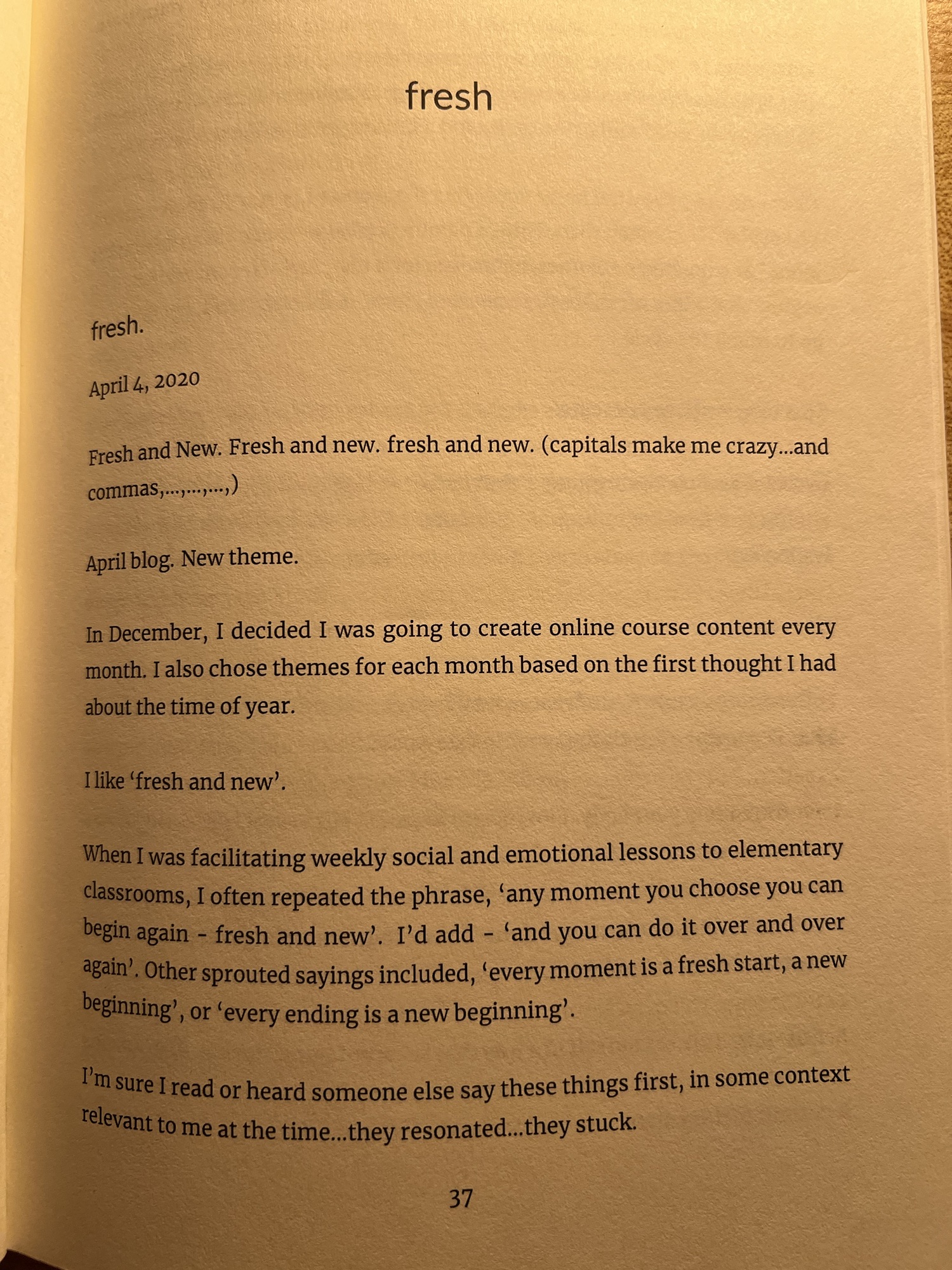
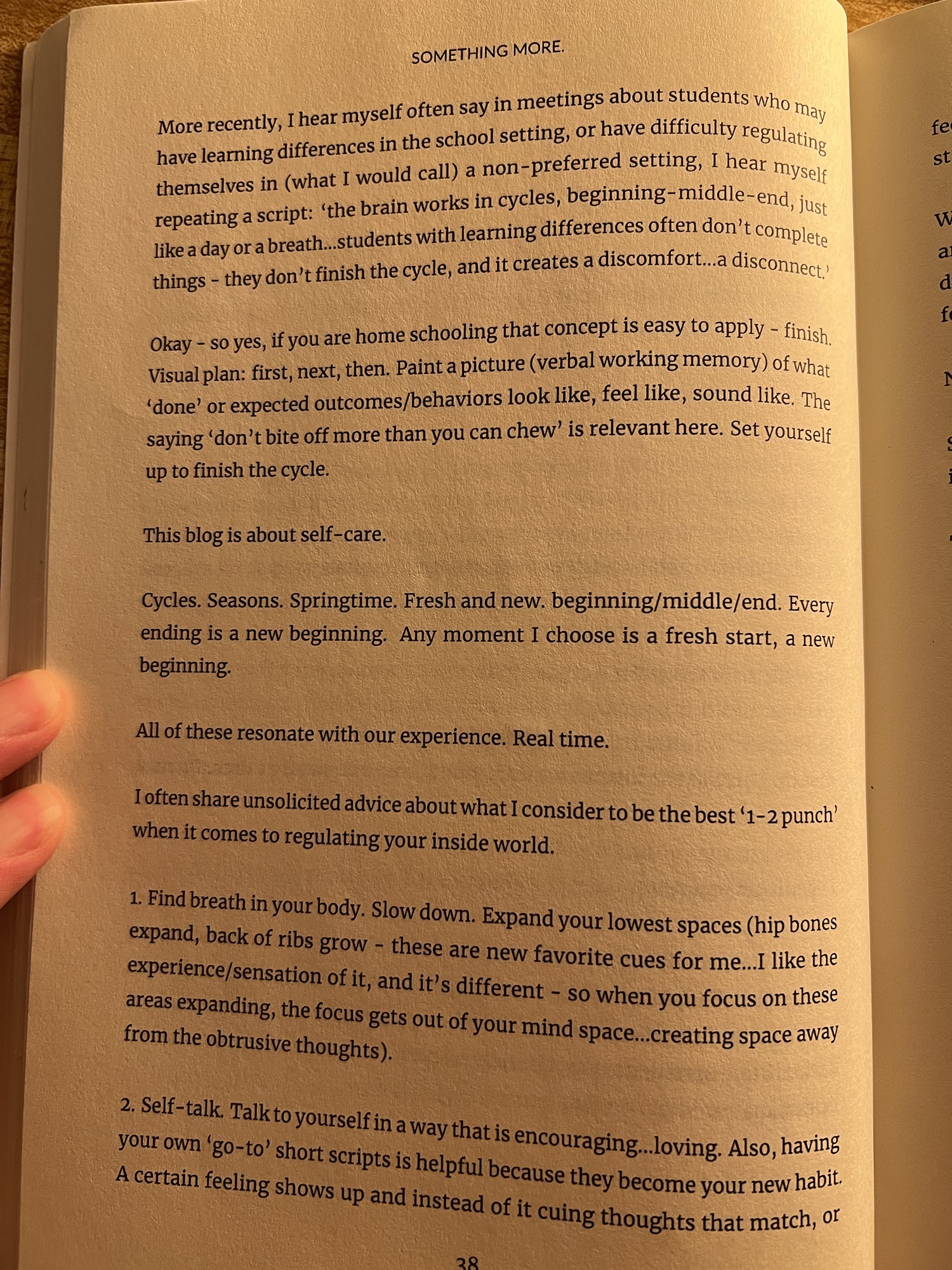
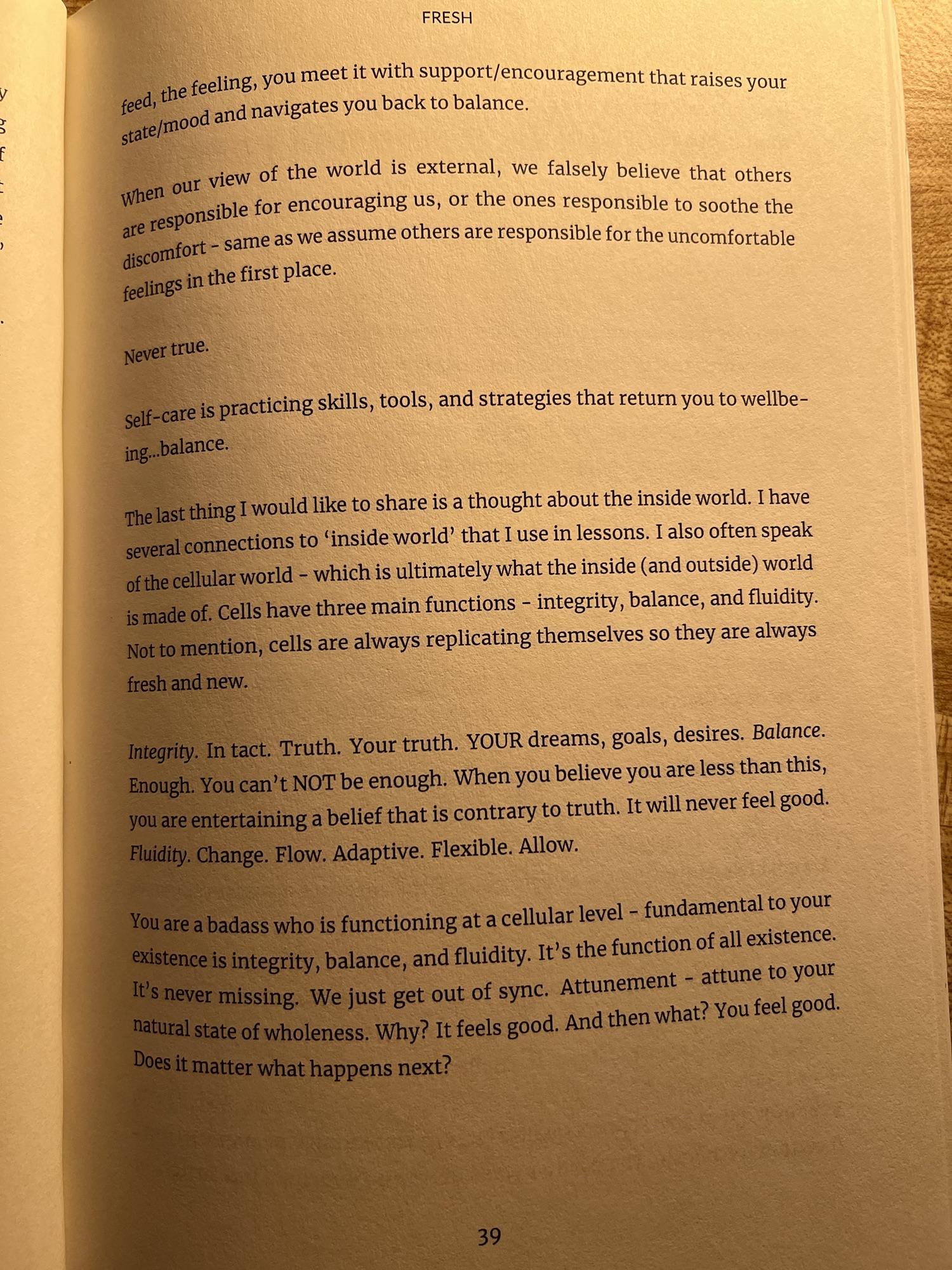
And now for the somethingmore excerpt for Thursday Book Club (where apparently the book is included…)…
Reflective questions:
- Do you ever think about thinking? Do you ever notice your thoughts? Have you intentionally changed your thinking to change your feeling state? Does it seem like a helpful idea?
- Do you have a go-to method to return to balance? Would it be helpful? Why?
- Could a curiosity about how cells function at a fundamental level, be helpful to understand and apply when it comes to adapting to new environments, or new ways of thinking?
 sally's blog.
Leave a comment