
Do you have a favorite month?
I love September. There’s just something about September…
My love for September may be a throwback to growing up in the midwest. In Denver, September is HOT. However, the mountains in September remind me of what I experienced living in Illinois for so many years.
This wasn’t what I was going to write about, but I realize I just shared an example of something I learned this week: an evocative cue.
The context in which evocative cue was mentioned came from time spent with a school professional (we’ll call her Kaylene) who spent time in Bologna, Italy this summer at a global conference for school psychologists. I think I asked her in parting (ie. quick response) what stood out as new thinking from the conference, and she said the word ‘trigger’ is definitely out, and the replacement is ‘activating event’ or ‘evocative cues’.
I like the word evocative because I like the word and meaning of ‘evoke’. I think of it in an uplifting way, related to any form of artistic expression, or natural beauty, where ‘the good stuff’ inside is evoked.
For the record, I have never used the word evocative and my first reaction to the word is connected to provocative.
I happened to see Kaylene twice within a week. The first time, I immediately integrated activating event/situation/circumstance, and put evocative cue on a mental shelf because it didn’t resonate the same way, I thought it would sound too clinical or confusing.
In the second meeting, I asked Kaylene to tell the group what she shared with me about replacement language for ‘trigger’. This time, she further defined evocative cue as the sensory experience of a situation in time and space. For example, environmental cues like time of year can evoke a particular response, as well as tone of voice, set and setting of a place such as a classroom or meeting space, a person in uniform, a person’s size or appearance. The individual response is being evoked at a cellular level.
Being curious about evocative cues can broaden one’s understanding of behavior related to self and others.
Self-awareness of how one is responding to a physical or social environment can allow one to recognize the significance particularly related to responses that are limiting, or keep one stuck or spinning in limiting outcomes.
When you notice your response, you can be curious about it. When you’re curious, you can further recognize patterns of behavior and how they effect your experience of day. When you care about yourself, you can move toward disrupting unhelpful patterns of behavior (behavior = what I say or do, or what I don’t say or don’t do; action or inaction). Recognizing the power of these patterns and how they can show up in the most uninviting and limiting ways, can increase one’s understanding of other people’s behavior as well. This grows compassion and increases helpful contribution to a shared humanity.
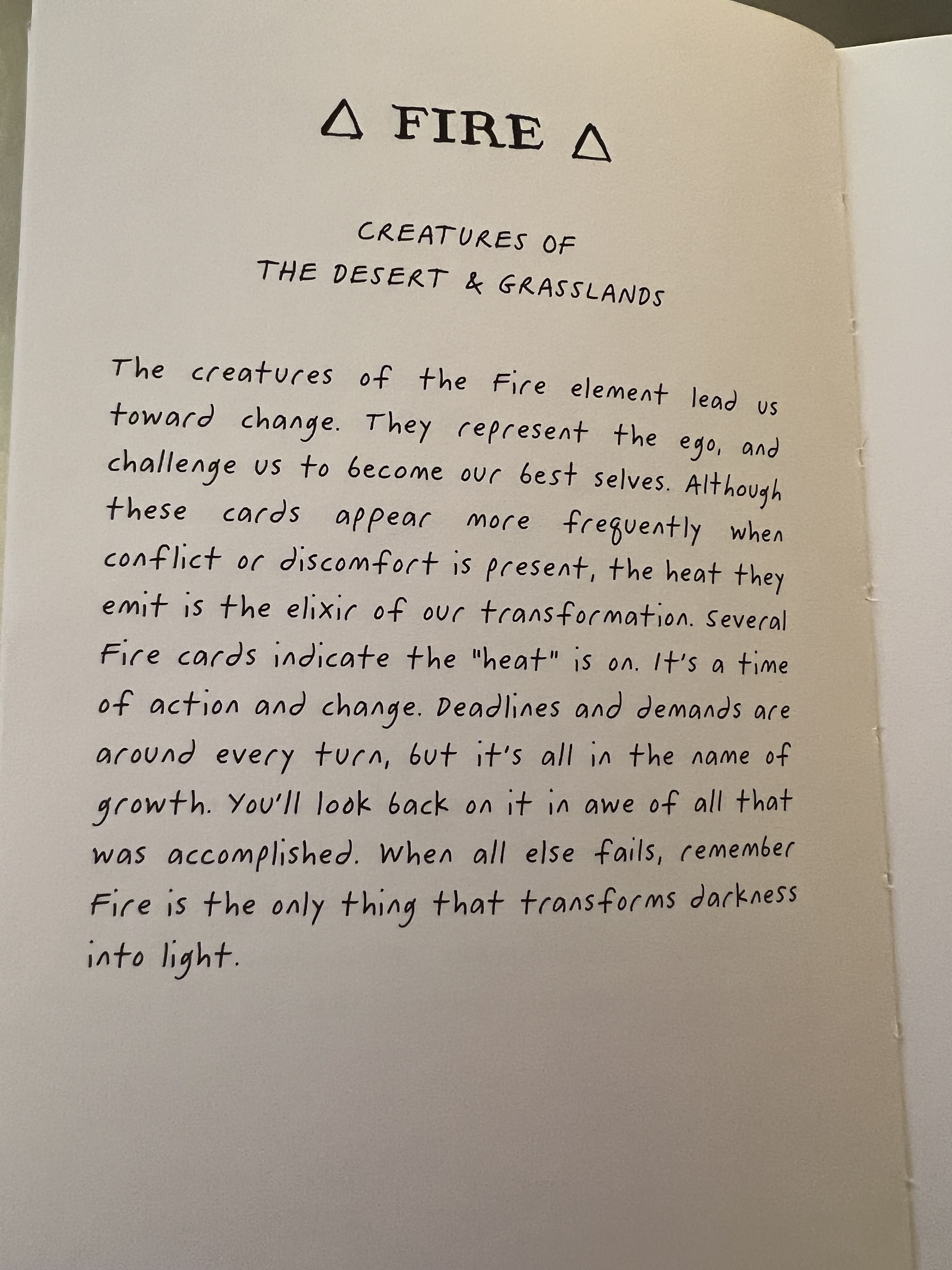
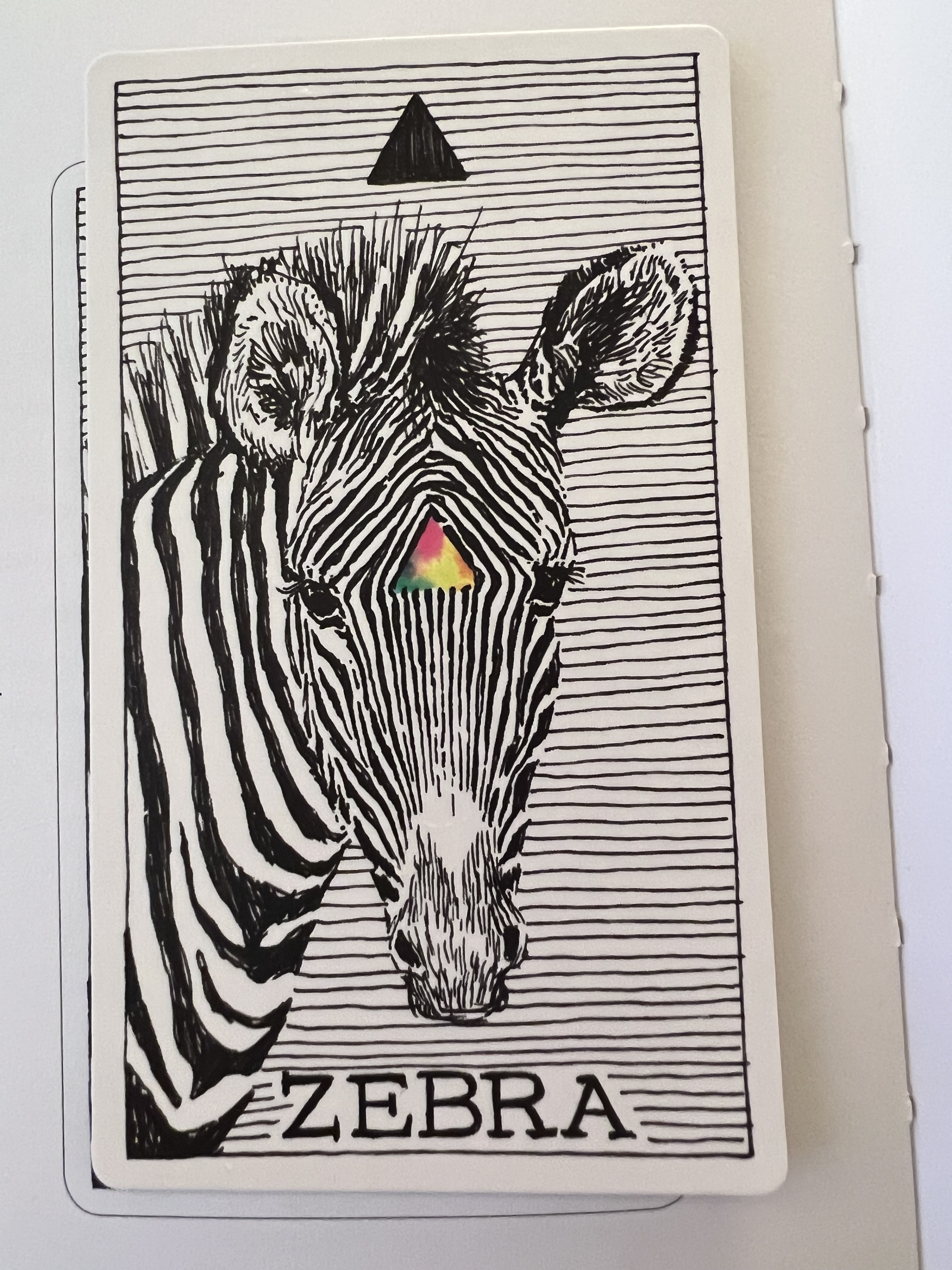
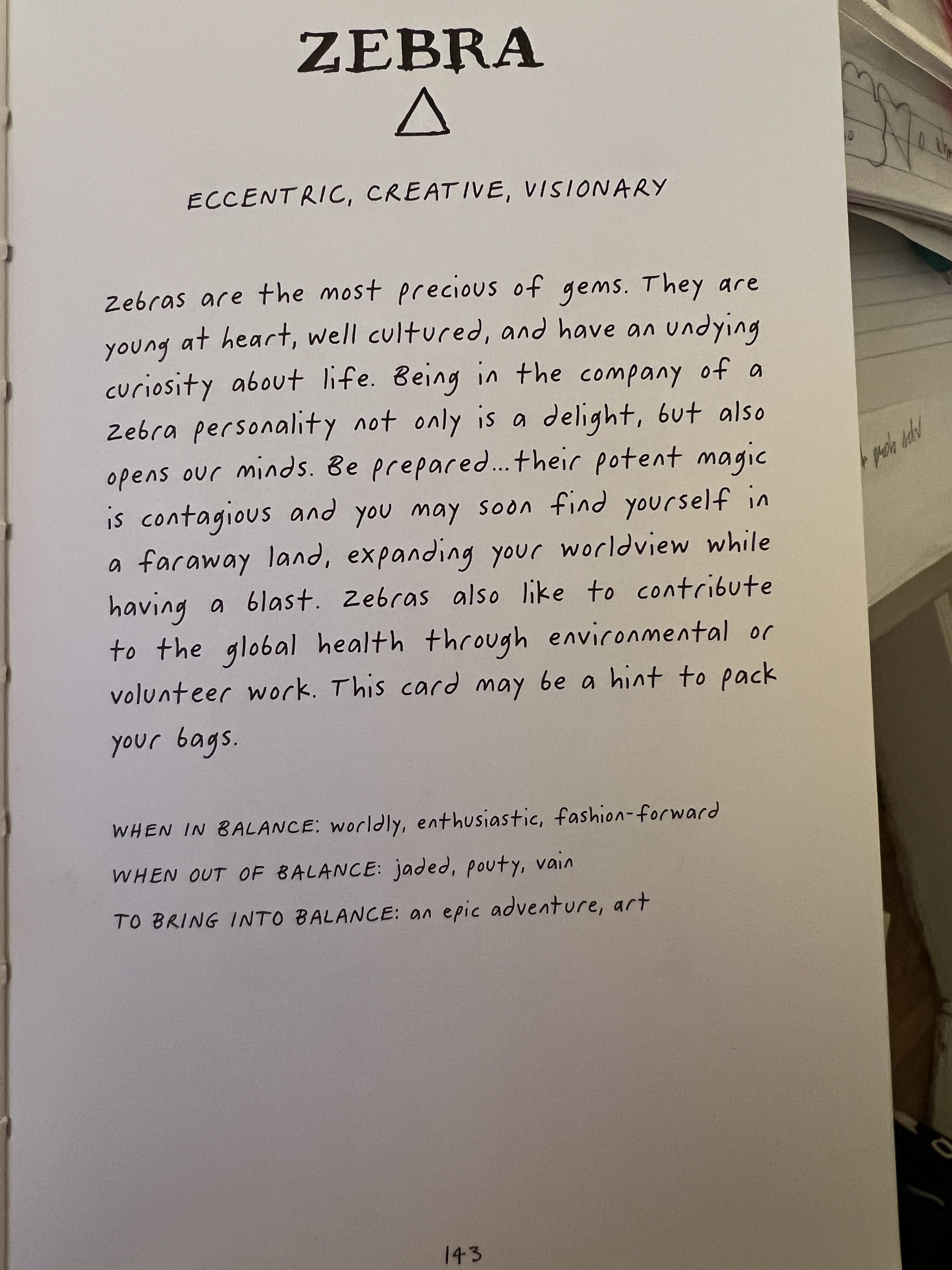
Now for the exciting part. The new Animal card for the new month. Zebra. It’s an exciting month folks.
Here is what I started to write about before I shared my evocative experience of September…
In my day. as it relates to what I do to receive a paycheck, I have become quite interested in what is categorized as ‘gifted and talented’, or GT as we refer to it in the school settings I spend time in.
Within the familiar setting there is, for the most part, a broader interpretation of what GT means.
The words GIFTED and TALENTED, are loaded words much like the words LOVE, GOD, and RESPECT: there are many interpretations, and the language evokes (hm) a variety of feelings and responses in a variety of contexts. To assume that people’s interpretation of these words is same, or even similar, is probably grounds for confusion and distortion, making effective communication quite difficult – assumed being the activating term (hm).
I am ready to close the post for now, but I will attempt to summarize my ‘why’ for this last part.
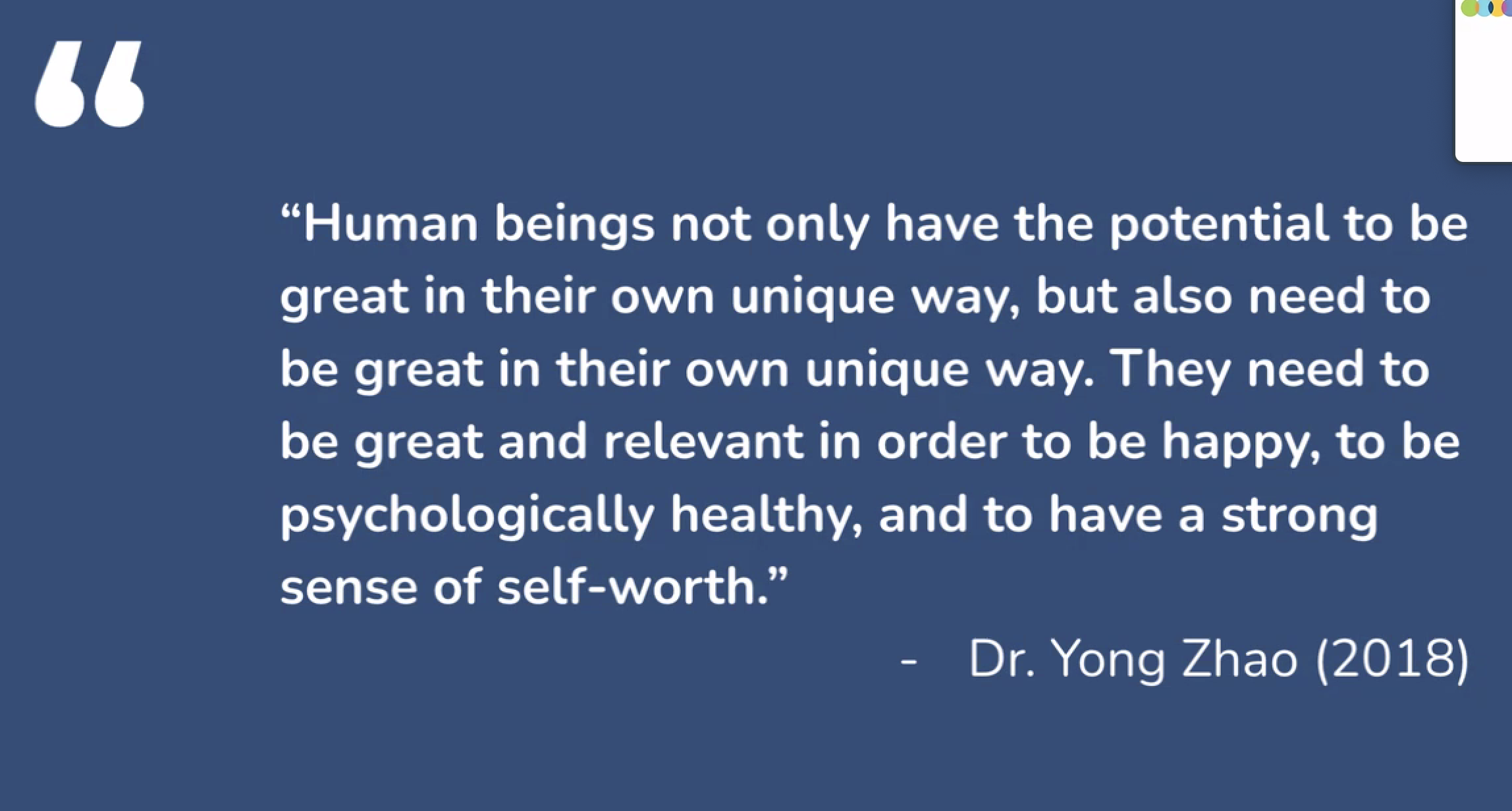
I liked the quote and found it on my desktop as a screenshot. I assume I took a screenshot from a webinar related to young people who qualify in a school setting as….neurodiverse. In this case, the term is twice exceptional. An individual has a skill, talent, ability that is demonstrated to be two standard deviations apart from the normed group for the age range (GT qualification), as well as demonstrates a social/emotional/communication/health/learning difference that is also two standard deviations apart from the normed group in the other direction (qualifies for a learning plan at school to level the playing field and might require specialized instruction).
The qualifiers create an oppositional tug-of-war that mostly shows up in the school setting as problematic behavior. Being placed in a category outside of a normed group can feel isolating. Being placed in two contrasting categories of a normed group feels even more isolating. Young people do not yet have the capacity to identify, understand, and manage feelings. Young people react to their feelings which can often reinforce the unintentional and false narrative that forms subconsciously when one feels isolated and alone, different, unwelcomed, unwanted, and so on. Feeling isolated works against a human need for connection and belonging.
Two things to think about:
- The quote is specific to the GT community. Question: is it not relevant to all persons? Is ‘great’ another loaded word? What does it mean to you?
- What happens when a neurodiverse community becomes what is considered typical? Is ‘typical’ a loaded word? What does this mean to you?
Change does not have to include a bulldozer and billion dollar pricetag. Being open to thinking differently is sometimes all that is needed to see the same thing in a different way. If the result in changing one’s thinking opens one up to a sense of possibility, that could be all the change that is needed to move toward helpful outcomes for a majority, and create the subjective space needed to be curious about populations whom land outside of the majority, or normed group, in a more purposeful way.
 sally's blog.
Leave a comment